
Building in Public: How we built BRIDGEPORT to solve our own deployment problem

The phrase “Building in Public” has become something of a buzzword. We are aware. But we are also aware that the tech community doesn’t respond to marketing speak… They respond to code, to real decisions, to honest conversations about what worked and what didn't.
This is us having that conversation.
But let’s back up for a minute.
There is a version of BRIDGE IN that most people know.
The company that helps businesses expand into Europe. The team that handles EOR, payroll services, business entity setup, compliance, you know… the parts of international expansion that look simple on a slide deck and turn out to be anything but. That version of BRIDGE IN is real, and it is what we are known for.
But it is not the whole picture.
"We've always been a company that solves complex problems: helping businesses expand into Europe, navigate compliance, build teams across borders," says Pedro Henriques, Founder and CEO of BRIDGE IN. "BRIDGEPORT is proof that we're not just service providers. We build things. And when we build something good that the community can use, we share it."
What is BRIDGEPORT?
The tools available for deployment management tend to cluster at the extremes. At one end, enterprise platforms are built for large teams with dedicated DevOps engineers and infrastructure budgets to match. At the other end, a collection of shell scripts, SSH (Secure Shell) sessions, and institutional memory that works until it does not.
BRIDGEPORT is designed to occupy the space in between.
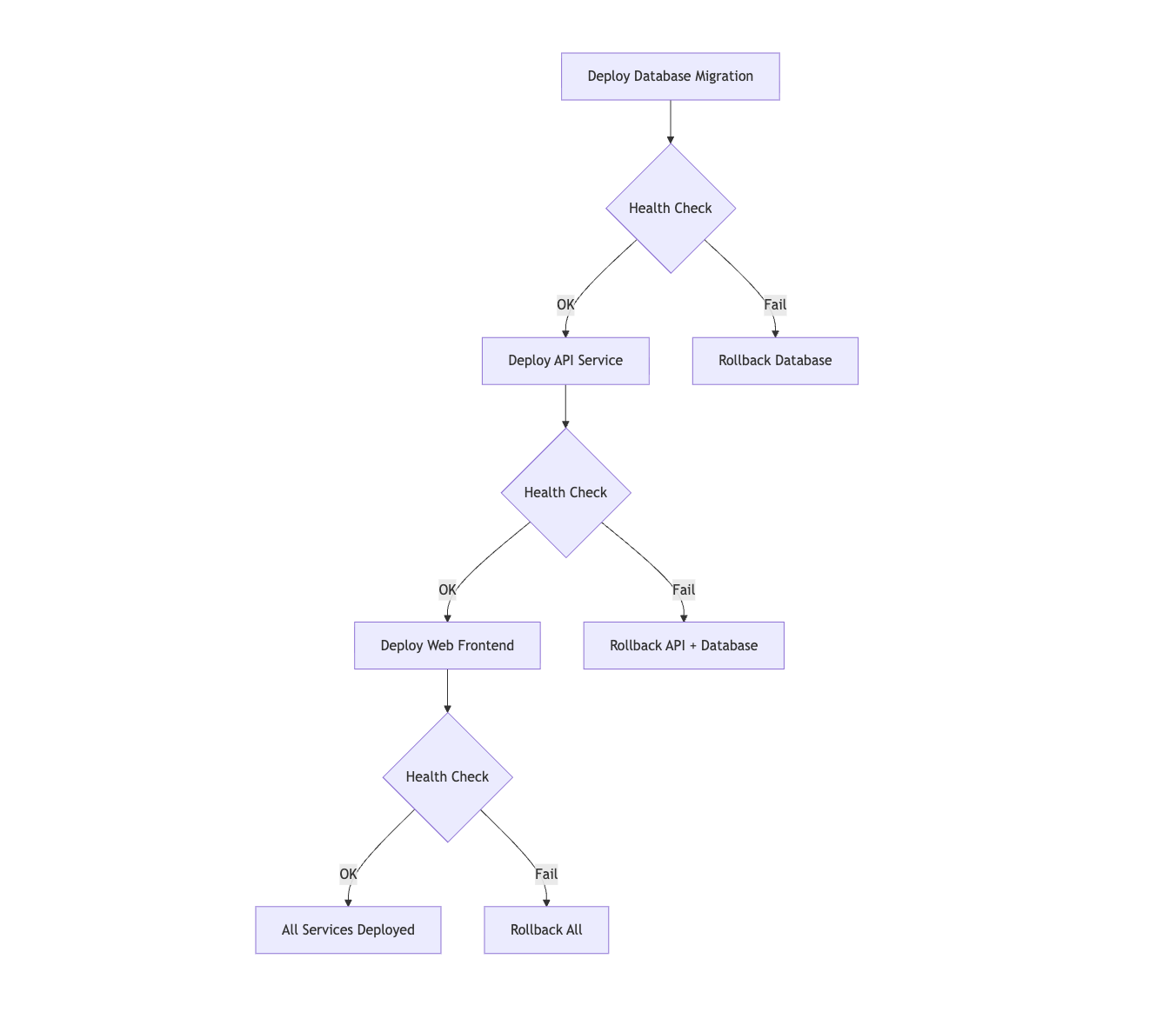
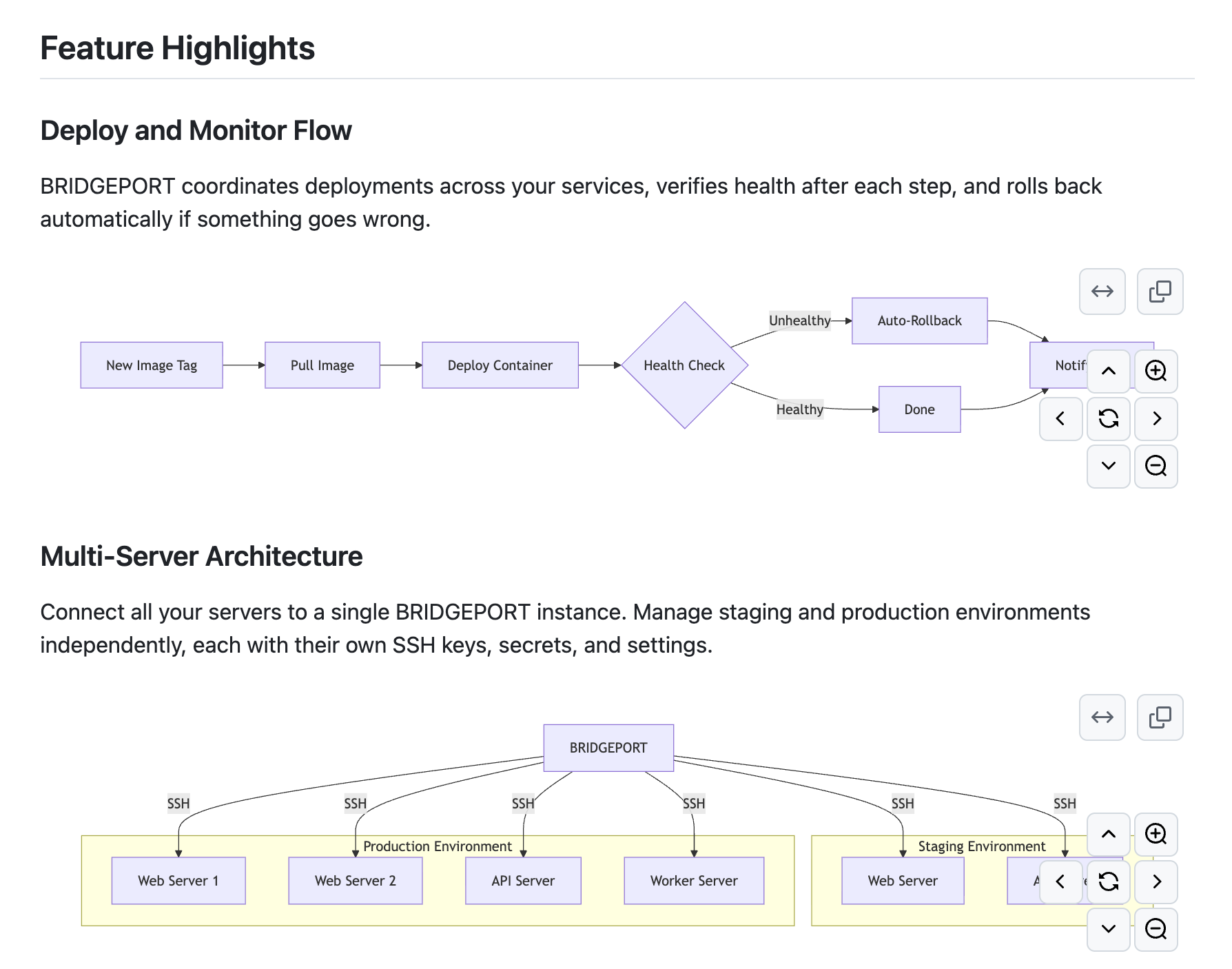
BRIDGEPORT is BRIDGE IN's self-hosted deployment management platform. It handles container deployments, database backups, health monitoring, and configuration management across distributed environments. It was built by our engineering team to solve our own infrastructure challenges. And as of today, it is open source.
The infrastructure problem hidden inside international operations
Expanding into a new country involves navigating employment contracts, labor law, local tax setups, and the nuances of payroll compliance. When companies consider expanding into Europe, they worry about legal and HR complexity. (Which is fair). Yet, companies often overlook the underlying infrastructure required to unify operations across multiple countries and time zones.
We do.
Because we live it.
"The companies we work with don't just need HR and payroll sorted. They need their entire operations to scale across borders," Pedro explains. "We live that problem ourselves. BRIDGEPORT came directly out of our own infrastructure challenges. We're not pivoting, we're showing the full picture of what it actually takes to operate internationally."
For João Gonçalves, BRIDGE IN's Founding Engineer, that full picture had a specific, frustrating shape. He had spent more than 15 years in infrastructure. He had seen what breaks. And he had seen it break in multiple organizations.
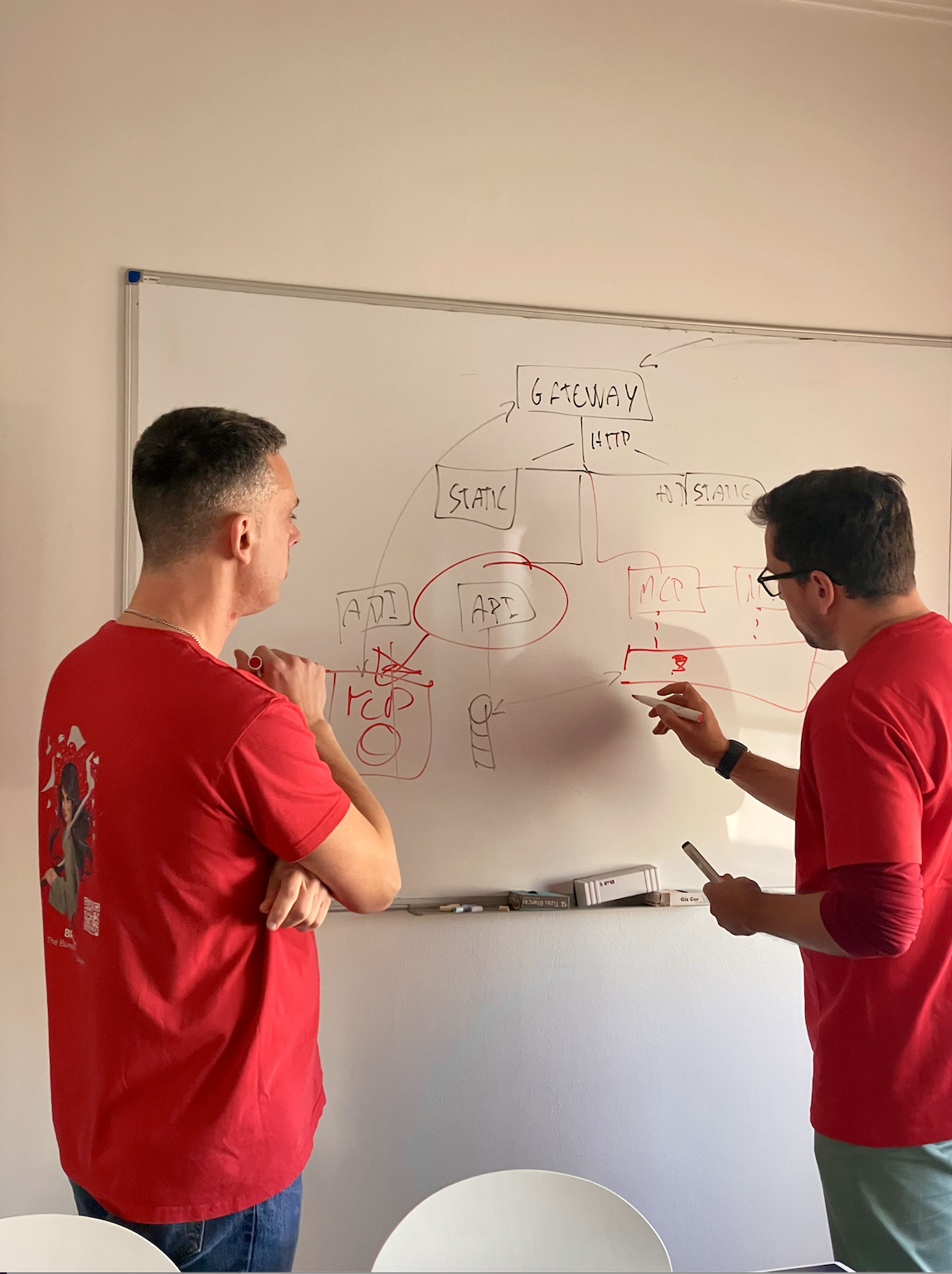
When you are managing services across different environments and regions, the operational complexity multiplies in ways that most off-the-shelf tools were not designed to handle gracefully.
The moment that tipped João over into building something was not a dramatic systems failure. It was an ordinary afternoon of work that should have been simple.
"I was debugging a configuration issue that involved editing settings across multiple servers and in our cloud provider's interface, plus our secret manager. And after that, the restarting of multiple services and checking their health status," João recalls.
"It was there that I decided that I needed a single place to centralize this information. Where I could change the configuration once, deploy to all servers, restart all services, and monitor all the services' health status."
The realization that the tooling you need does not exist yet is one that most engineering teams in growing companies will recognize. So you’re faced with 2 paths: patch around it or build through it. João decided to build through it.
Building something real under real constraints
There is a particular kind of discipline that comes from building a tool inside a company whose primary mission is something else.
João built BRIDGEPORT alongside everything else. No dedicated roadmap process, no product committee, no unlimited runway for features. Every decision had to justify itself against the immediate reality of what the engineering team actually needed.
"It was freeing in some ways, challenging in others," he says. "There was no committee, no roadmap by consensus. But you're building it alongside everything else, which forces you to be ruthless about what matters and very pragmatic about what makes the cut. Every feature had to earn its place."
The result is a tool with strong opinions about what it does and what it does not do. It is self-hosted and lightweight. It does not try to be everything. It tries to be useful from day one.
"I wasn't trying to replace Kubernetes or Docker Swarm. I wanted something a small team could self-host, understand, and actually trust. Everything that made it more complex was left out. It's also built in a way that you can start small and grow the complexity as you need," João recalls.
What does that mean in practice?
It means a team currently managing Docker deployments through SSH and shell scripts can get started with BRIDGEPORT, connect their environments, and see everything in one place within a day. By the end of the first week, they are deploying new versions of applications with a single click and receiving alerts when something goes wrong, rather than finding out when a user complains.
That last detail is the one that lands hardest with engineers who have been there. Finding out from a user complaint is not hypothetical. It is the specific, recognizable pain of infrastructure that is held together by hope and the absence of bad news. BRIDGEPORT replaces that hope with visibility.
"Fifteen years means I've seen what breaks. And I've seen it break in a few different organizations," João says. "BRIDGEPORT isn't theoretical. Every decision in it comes from a real problem I've either lived through or watched someone else suffer through."
The moment João knew it was more than an internal tool came in a conversation with a friend who is also a software engineer. "I described it to him and watched his face," João says. "He said: 'I have the same problem.' That was the moment it stopped being our internal tool and started feeling like something real, something other people actually needed."
Why open source, and why now
When something works well internally, the obvious moves are to keep it protected or to productize it.
We chose neither.
"The problems BRIDGEPORT solves aren't unique to us. They're universal," João says. "And the best way to make something better is to put it in front of people who'll push it in directions you never imagined. Open source isn't giving it away. It's an investment in the same community that built everything I've ever worked with."
For Pedro, the decision connects directly to the kind of company BRIDGE IN is becoming.
"We want to be a tech company, not just a company that uses technology," he says. "Open sourcing BRIDGEPORT is a statement about who we are. And building in public means we're accountable to the community, to the market, and to ourselves."
That accountability is the part of "building in public" that tends to get lost in the phrase. Transparency as a brand strategy is easy to perform. Putting your code in front of the world, knowing that every architectural decision made under pressure, every shortcut taken at speed, is now visible... is something different. Whatever it is, the way you tell your story online can make all the difference.
João is clear-eyed about what that exposes.
"Code scrutiny is real. You're exposing decisions you made under pressure, at speed," he says. "But what I'm most nervous about is staying focused. When a community starts contributing, there's a pull in tens of different directions at once. Keeping the product true to its core purpose, well, that's the hardest thing to get right."
BRIDGE IN is building the integrated legal, financial, and technical layer for global businesses. BRIDGEPORT is one piece of that. We’ve chosen to build in the open to collaborate with the community and to prove publicly and irreversibly that BRIDGE IN is a company that ships.
Get started with BRIDGEPORT
BRIDGEPORT is open source and available now. If you are running a distributed infrastructure and spending more time managing it than building on it, it is worth a look.
BRIDGE IN helps companies expand into Europe, from legal entity setup to payroll, compliance, and the infrastructure to support it all. If you are scaling internationally and want a partner who understands both the service and the software layer, let's talk.
